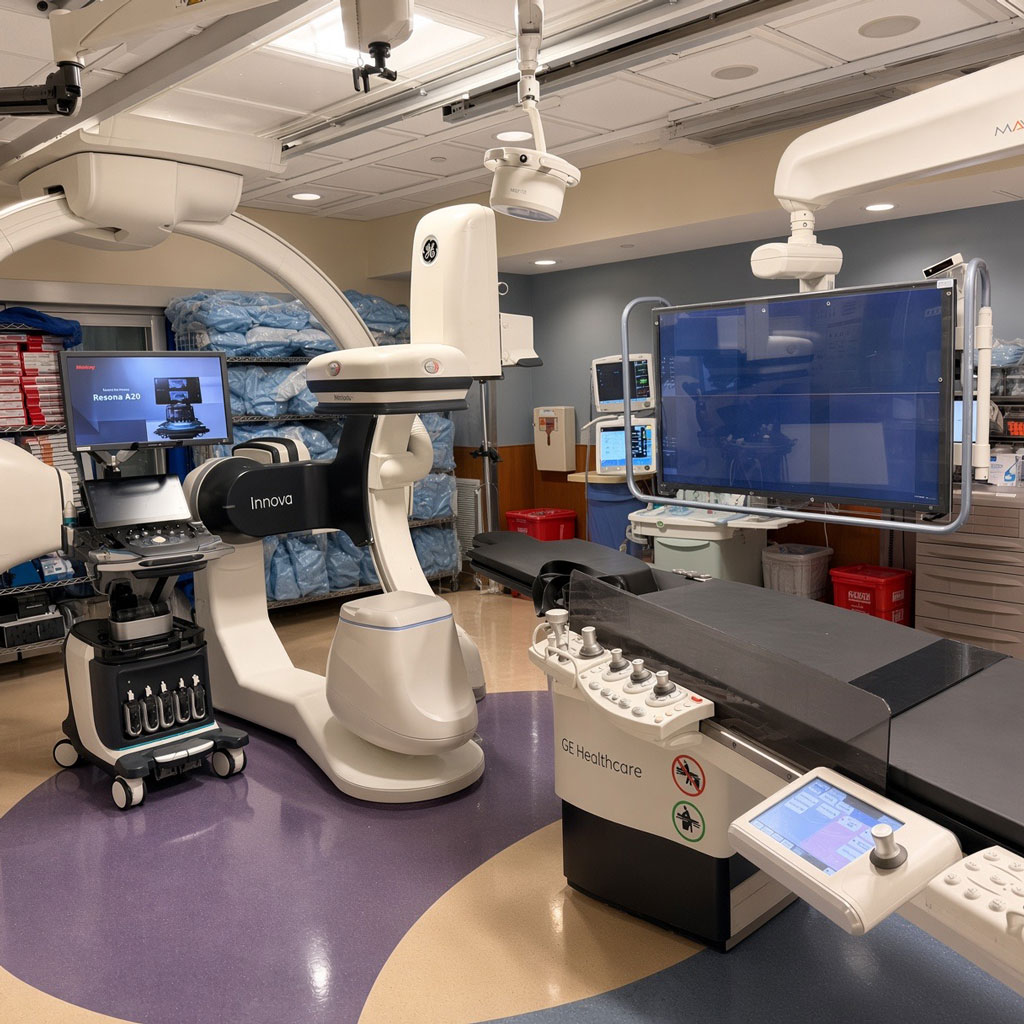
Neurointerventional Procedures at University Radiology
Embolization
Embolization is a minimally invasive procedure that closes off specific blood vessels in the body. Depending on the treatment, embolization may involve the use of coils, balloons, embolic particles (chemical agents) and specialized medical glue. By rerouting blood away from embolized vessels, the procedure can improve blood flow to important tissues and reduce the risk of aneurysm rupture.
In cancer patients, embolization may be used as a presurgical treatment to shrink tumors; it also helps reduce blood loss and improve visualization during surgery. Transarterial chemoembolization, a specific type of embolization procedure, can be used to treat recurrent or inoperable brain tumors. During the procedure, a neurointerventional radiologist uses image guidance and a catheter to deliver chemotherapy drugs directly to cancerous lesions.
Stroke Therapy
Stroke treatments at University Radiology aim to reduce the risk of stroke in patients with known aneurysms and other risk factors. Our physicians use several different procedures to prevent strokes:
Intra-arterial thrombolysis delivers specialized, clot-dissolving medicine directly to affected blood vessels.
Cerebral angioplasty uses a small balloon to open narrowed blood vessels, and may be accompanied by a metal stent to keep the vessel open.
Coil embolization blocks existing aneurysms and redirect blood flow to prevent hemorrhagic strokes.
Angioplasty and Stenting
In addition to stroke therapy, angioplasty and stenting can also be used to treat abdominal aortic aneurysms (AAAs), coronary artery disease (CAD) and peripheral artery disease (PAD). Angioplasty is sometimes used to treat venous insufficiency and certain kidney issues. Angioplasty does not always involve the use of a stent.
Vertebral Augmentation
To treat spinal fractures, University Radiology offers two neurointerventional radiology procedures: vertebroplasty and kyphoplasty. Both procedures involve the use of bone cement to improve spinal stability and reduce pressure on the spine from compression fractures. Vertebroplasty involves the injection of bone cement directly into fractured vertebrae, while kyphoplasty uses tiny balloons to lift vertebrae into proper position before applying bone cement. Patients enjoy reduced back pain and can even regain height lost to spinal fractures.
Interventional Diagnostic Procedures
University Radiology’s neurointerventional radiology services also include specialized diagnostic testing. CT-guided biopsies allow physicians to retrieve small samples of tissue from suspicious legions, which are then tested for cancer. Discography uses X-ray guidance and injected contrast to determine the source of disc-related back pain.
Inferior petrosal sinus sampling (IPSS) procedures for tumors of the pituitary gland are offered by Albert Li as part of University Radiology’s interventional radiology services.